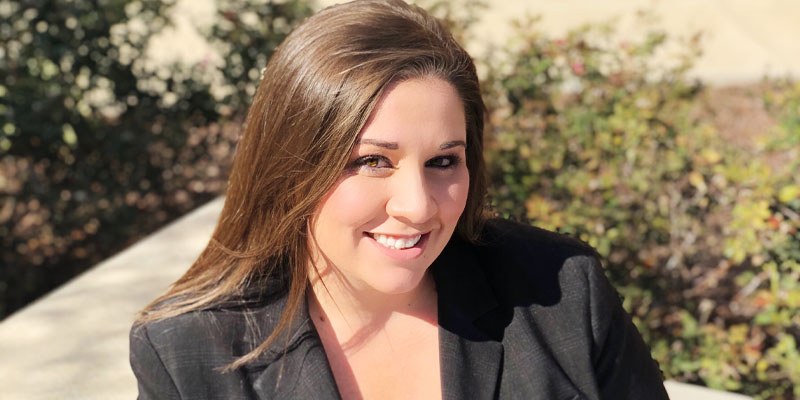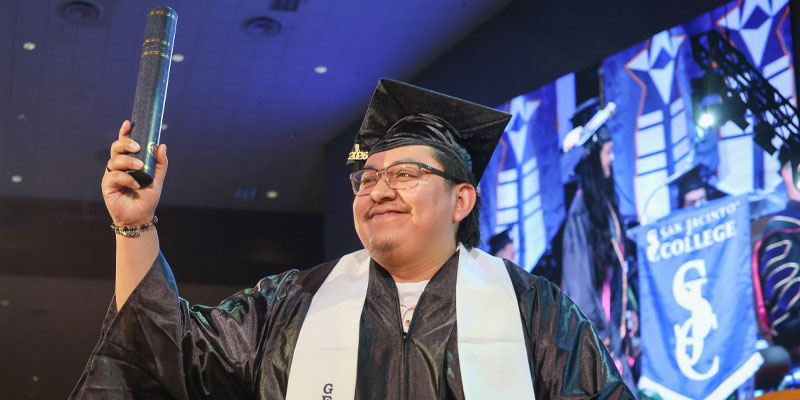
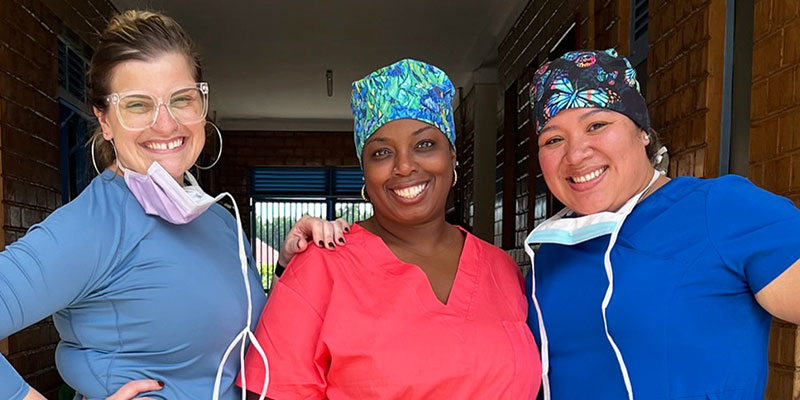
Jet-lagged, nauseated, and missing luggage, San Jacinto College nursing graduates Cristina Gutierrez, Jasmine Martin, and Katelyn Smith stared at 16 bins of medical equipment outside the rural Uganda hospital.
The reality of the week ahead sank in.
Within hours, they would help transform empty rooms into a makeshift surgical unit for Ugandans who had spent their entire lives walking in pain.
Nursing school friends
Nursing friends serving together in Uganda (courtesy of Katelyn Smith)
The real story began in 2021, when the three met in San Jac’s associate degree nursing program.
All had entered nursing for different reasons. Martin admired her grandma’s patient care for her great-grandma after a stroke, and Gutierrez wanted to help kids like the orphans she had met with cleft palates in El Salvador.
Smith claimed the most unconventional route: seeing a man in scrubs badge into a private door at the hospital.
“It felt like a club I wanted to be a part of,” she said.
San Jac’ s program proved the perfect training ground. During COVID-era nursing training, simulation labs and supportive instructors taught them to adapt quickly.
“Our instructors pulled out all the stops to make sure we learned and gained the skills so we could feel comfortable when we got our jobs,” Martin said.
After graduating in 2023, they would soon test these skills far beyond San Jac.
Care without a blueprint
In February 2026, the nurses reunited for their globetrotting adventure after Smith’s husband connected them to charitable surgery team in Kyotera, Uganda.
Dr. Christopher Miller, a Dallas surgeon, would be performing hip and knee surgeries on 12 Ugandans ranging from late teens to 60s. His goal? Helping these patients move through their day without pain.
Miller brought his own surgery team and equipment. After helping set up in an empty wing of the hospital, Smith, Gutierrez, and Martin plunged into pre-operation, post-anesthesia, and post-operation care.
While the surgeries were routine, the conditions surrounding them were anything but. Some patients needed extra care because of sickle cell anemia, and severe deformities required Miller to carve out new sockets for joints.
“These people have been living like that their whole life,” Smith said. “But I don’t think before this initiative came forward they ever thought it could be different.”
Many could not speak English and didn’t understand what surgery would involve.
Not only was working through an interpreter challenging, but so was finding even basic medical resources. At one point, Martin noticed a patient’s knee swelling too much after surgery. Even the blankets she had been rolling up as support had run out.
“The hospital didn’t have extra pillows or wedges,” Martin said. “They didn’t have anything we would normally use to elevate a patient’s leg.”
Her partnering Ugandan nurse came to the rescue, scooting a table to the foot of the bed and propping up the patient’s leg.
Human side of healing
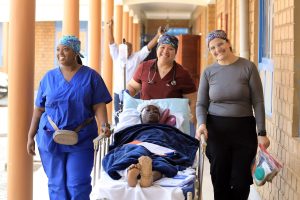
Heading to surgery (photo courtesy of Katelyn Smith)
Despite the language barriers and improvisation, the strongest connections required no translation.
One patient stands out to Gutierrez.
“She didn’t speak English, and it was so hard because all I saw was a smiling face,” Gutierrez said. “I told the translator to tell her, ‘If I can’t tell you anything, I just want you to know your face radiates joy.’ When she heard that, she smiled even bigger.”
Beyond the patients themselves, the culture of shared care throughout the hospital impressed the nurses — like a “traveling baby” passed from one smiling mother to the next.
“That’s just their humanity,” Smith said. “This precious little girl was a symbol of how these people operate every day…. We all have to take care of each other, and we’re all in this together.”
Empty beds, full hearts
By the week’s end, patients who had arrived scared and in pain left grinning and walking pain-free for the first time in years.
Gutierrez, Martin, and Smith returned home changed too: more grateful, grounded, and certain that nursing has little to do with equipment and everything to do with connection.
“This won’t be the last time for any of us,” Martin said. “We’re definitely interested in other opportunities.”
For them, Uganda was never just a trip. It was a reminder of why they became nurses in the first place.
Learn more about San Jac’s nursing programs.
By Courtney Morris